Posted On: January 21, 2025
Highlighting the Impact of Research Internships
Missouri’s Agricultural Experiment Station includes four research, extension and education centers (REEC), spanning nearly 14,000 acres, each serving the unique needs of the state’s farmers and producers. But the benefits of these research-focused centers extend beyond the farming community.
In 2024, the CAFNR Foundation contributed a total of $18,800 to support three summer research internships at Missouri’s Agricultural Experiment Station. These funds were allocated to internships at the Fisher Delta REEC, the Central Missouri REEC and the Southwest REEC, providing students with opportunities to further prepare for careers in agriculture. Through these internships, CAFNR students Ryan Noble and Jackson Rhine gained hands-on experience and expanded their learning beyond the traditional classroom setting.
Jackson’s Journey: Gaining Experience Early
For freshman Jackson Rhine, an internship with the Southwest REEC was more than a summer job; it was a direct look at what his future after graduation could resemble. Something the freshman says he doesn’t take for granted.
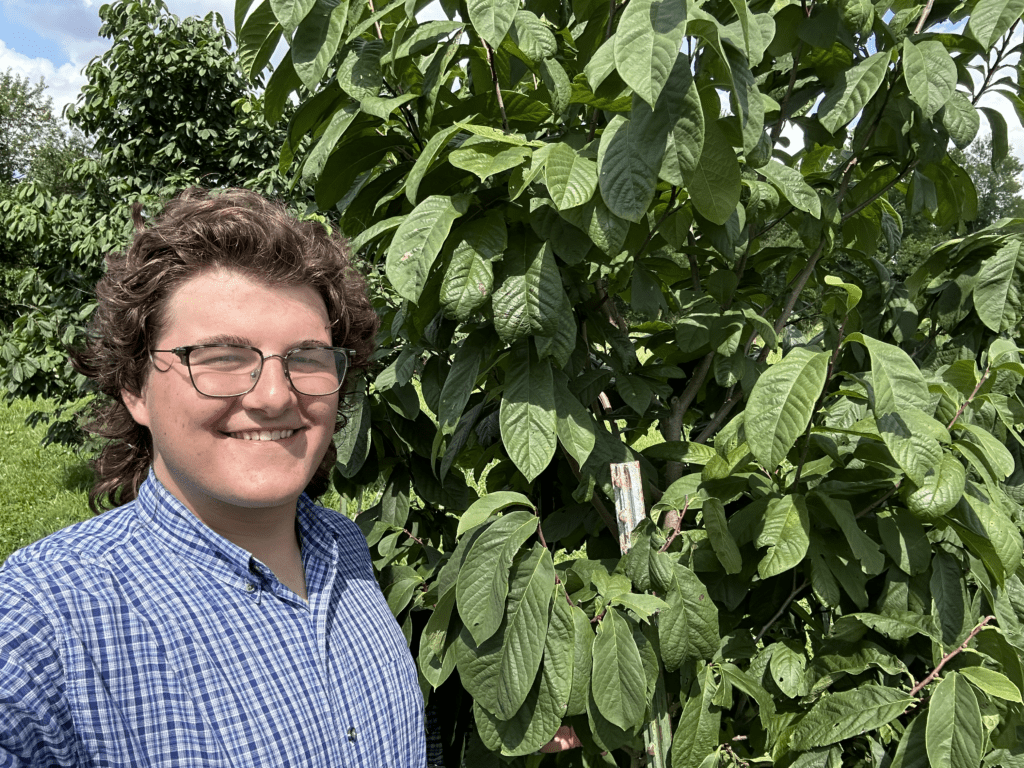
“I kind of struck gold because I got my first job doing something I’m passionate about, and it’s paid dividends,” Rhine explained. “Even when I came back up here to Columbia for the school year, I still connect with people I met through the internship — grad students, professors and even Dr. Andy Thomas and Director Jay Chism. They’ve introduced me to others, helping me build a network and feel part of the world of extension education.”
Throughout the summer of 2024, the Joplin native’s internship responsibilities spanned from assisting in an elderberry project in cooperation with Missouri State to herding up cattle for breeding management and health monitoring. Each task often took the plant sciences major out in the field, which is exactly what he was hoping for when finding this internship opportunity in his senior year of high school.
“I’m not really from a heavy ag background,” Rhine said. “So, this internship was handy. It gave me a chance to get up close with the different facets of an actual farm.”
When thinking about one of his favorite memories from his internship, Rhine reflects on when he helped the team round up cattle at the crack of dawn.
“Chad, one of my mentors, was great at teaching while working,” Rhine said. “He showed me how to move 700-lb. steers without even touching them — encouraging the steers to get through the chute and get to where you want them to go. It was the neatest thing.”
With aspirations to work in university extension, Rhine is eager to bring research to the public and make it accessible to rural communities.
“This internship has given me a head start,” Rhine said. “And especially nowadays, when so many jobs after graduation require prior work experience, this has been great.”
Ryan’s Research: Hands-On Learning in Crop Protection
A summer internship at the Fisher Delta Research, Extension, and Education Center (REEC) was a chance to return to sophomore Ryan Noble’s roots in Portageville, Missouri, and deepen his connection to the farming community. His internship focused on crop protection brought textbook knowledge to life, helping him get one step closer to his career goals.
“During my internship, I scouted for plant bugs in cotton and other crops and mixed chemicals to spray for test plots — measuring different chemicals and different rates,” Noble said. “Toward the end of the summer, after I knew more of the ins and outs, I did a lot of planting, spraying and then also just keeping up the plots, making sure they looked healthy.”
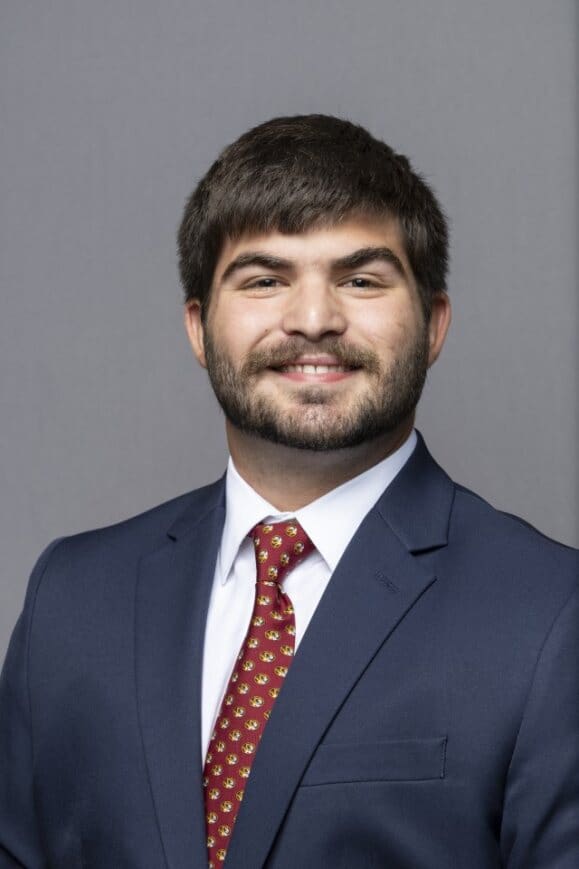
Noble credits much of his positive experience to the Fisher Delta REEC team, including his mentor, Chase Floyd. “I’m a very hands-on learner and Dr. Chase Floyd brought to light a variety of crop protection and entomology topics. He’s incredibly knowledgeable, and he let me ask as many questions as I needed to keep learning.”
One of Noble’s favorite parts of the summer was the variety of tasks each day brought. “Every day I woke up and I was excited to go to work because I knew we were going to do something different. We could be planting, spraying or even visiting a different research farm — it was never the same,” he said. Beyond the technical skills he gained, Noble valued the relationships he built with his colleagues.
“For any young person interested in agriculture, I think the Fisher Delta Research Center is a great place for an internship,” said Noble, who is majoring in ag systems technology and plant sciences. “If you’re willing to learn, listen and work, people like Dr. Chase Floyd, Dr. Bradley Wilson and other team members are ready to teach you. And that is hard to come by in an internship.”
This experience, Noble said, has profoundly shaped both his personal and professional goals.
“After graduation, I want to help small farmers — those with 1,000 acres or less — find innovative ways to improve their operations,” he explained. His internship not only gave him new insights into the agriculture industry, but it also helped him identify career paths he hadn’t considered before; opening his eyes to new ways to help current and future farmers.
Today’s Students Are Tomorrow’s Leaders
Data from the College of Agriculture, Food and Natural Resources (CAFNR) show 96.8% of students have successful career outcomes within six months of spring graduation. This is in large part due to the education, research and internship opportunities provided to students from day one of their educational career at CAFNR — or in Jackson Rhine’s case the summer right before day one even began.
The CAFNR Foundation is proud to support students like Rhine and Noble, to help prepare the next generation of leaders for tackling global challenges such as climate change, food security and sustainable farming. Their stories offer a glimpse into how these opportunities enrich their studies and equip them for their future career paths.