Posted On: August 27, 2025
At the heart of Missouri agriculture are the voices of those who rise before dawn, work through unpredictable weather and face a multitude of challenges throughout any given year. The CAFNR Foundation believes supporting these farmers and ranchers begins not with grand solutions, but with something simpler — listening.
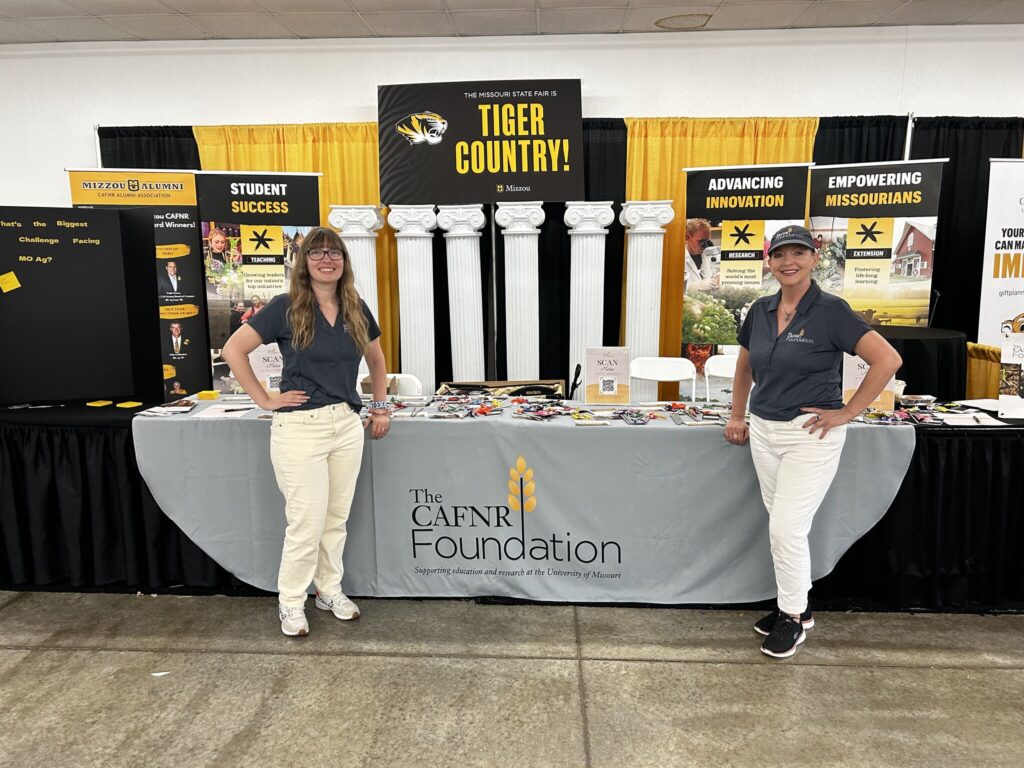
Thus began the CAFNR Foundation’s journey to engage with those involved in Missouri agriculture by asking the question: “What are the biggest challenges facing Missouri agriculture?” To listen and learn firsthand, the Foundation set up a booth at the 2025 Missouri State Fair, offering fairgoers a welcomed break from the summer heat inside the air-conditioned Mizzou Central Building.
Among the more than 100 voices the Foundation heard from in August is Jessica Brock-Newland of Benton County, a farmer who has owned and showed horses for nearly 20 years. She has been struck by the rapid rise in hay prices, driven by various economic factors and, in some cases, tighter supply and sustained demand in her region.
“It’s difficult to get hay from people when they want $12 to $20 for a small square bale, when bales should be going for between $7 and $10, depending on the type of hay,” she said. “This year, we’ve had an abundance of rain — almost too much — so prices should be good.”
Breaking this down, Brock-Newland buys 300 bales per horse each year. What cost $2,900 per horse this past year could rise to $5,000 or more for 300 bales in 2026 if prices continue trending upward. She worries that increasing input costs could threaten animal welfare and small-farm sustainability, underscoring the need for community cooperation in uncertain times.
“We all need to pull together,” Brock-Newland said. “Everybody needs to work together to keep our farmlands thriving.”
Higher input costs and low returns were recurring concerns among Missourians who spoke with the CAFNR Foundation. Another perspective came from a post-fair follow-up discussion with Linn County livestock producers Kaci and Bryant O’Kane.
“Everyone talks about how high cattle prices are, but no one talks about what it costs to keep them, and it’s still really high,” said fourth-generation producer Bryant O’Kane. “The only thing that’s gone down right now is corn, but fertilizer prices for hay and pasture production are sky-high.”
The O’Kanes bale their own hay and, like Brock-Newland, have noticed rising prices per bale in their region.
They also highlighted significant barriers for new farmers, especially soaring land prices and restrictive Farm Service Agency loan programs. In 2021, the O’Kanes purchased 120 acres of their own land, which now forms a part of the larger, multi-generational O’Kane Ranch operated alongside Bryant’s father and brother. Bryant described acquiring their own acreage as one of their toughest hurdles.
“If I wasn’t just a quarter mile from my parents’ place and didn’t have access to their equipment and cows, it would be an even bigger amount of debt we’d have to go in having to buy cows, buy hay, tractors to make hay, etc.” Bryant explained. “Their help has helped make our part of the operation possible.”
Both Bryant and Kaci said that these obstacles jeopardize the sustainability of family farms and the ability of younger generations to continue in agriculture, putting Missouri’s farming communities at risk.
“If younger farmers can’t get in and make their farm profitable past the first two years, they’re not going to make it,” Kaci said. “How are the next generations of family farms supposed to survive?”
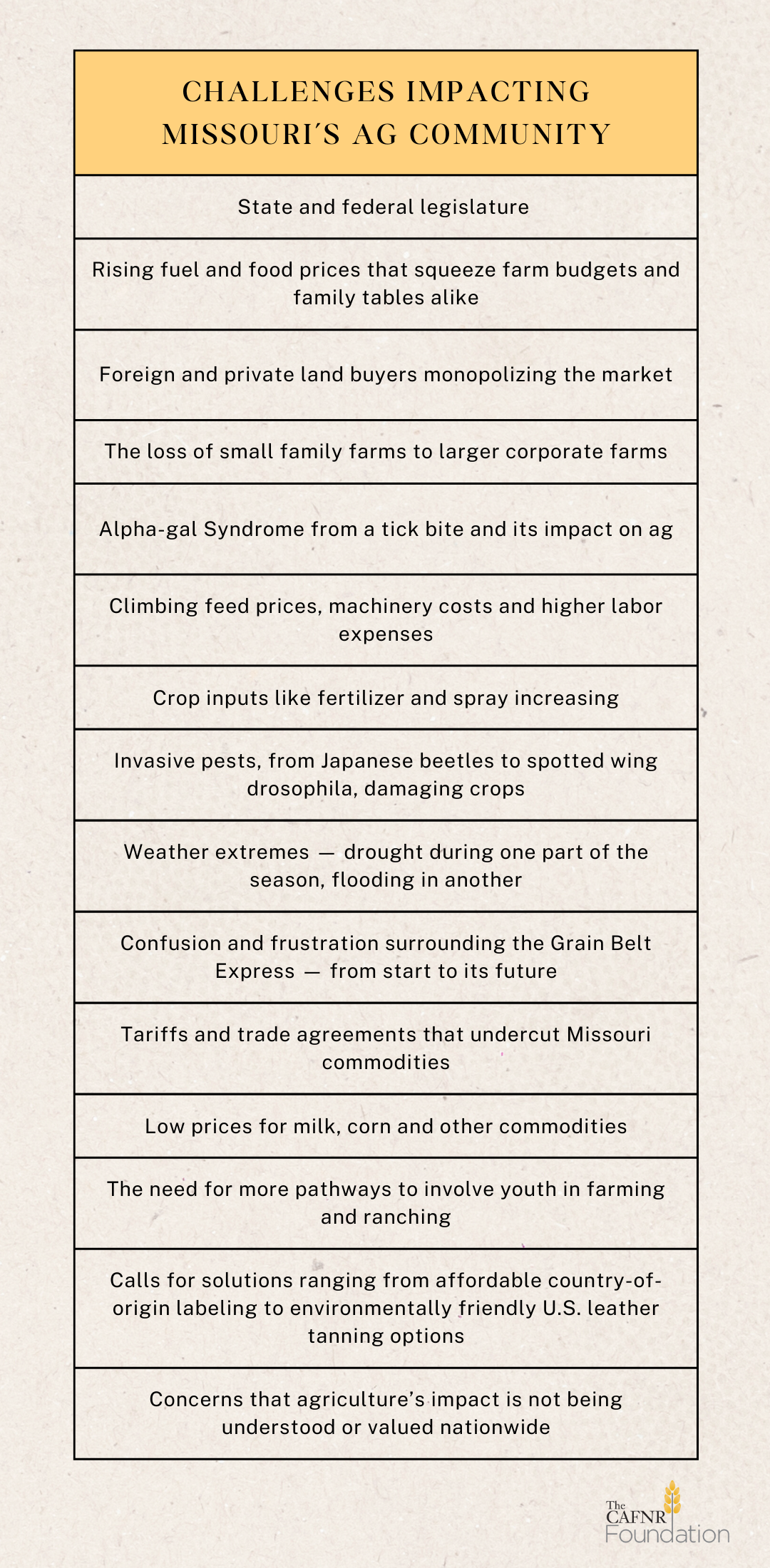
Brock-Newland’s and the O’Kanes’ stories provide a small glimpse into the many Missourians the CAFNR Foundation has spoken to since mid-August. From individuals longing to enter the industry but priced out of starting costs, to seasoned producers questioning if they will survive another year amid market uncertainty, the conversations have been heartfelt, candid and eye-opening. Additional concerns brought to the CAFNR Foundation’s attention so far are listed in Figure 1.
When those working in agriculture face obstacles, the ripple effects reach all of Missouri, from rural communities to grocery store aisles in every one of the state’s 114 counties.
That is why conversations with individuals across Missouri hold such meaning. By listening closely to the concerns of those working in agriculture, the Foundation and its leaders ensure every dollar invested in research, continuing education, student opportunities and other innovative projects makes a meaningful difference where it is needed most.
Join the conversation by emailing info@cafnrfoundation.org to share the challenges you’re facing in Missouri agriculture. The CAFNR Foundation team will present these insights at their next all-board meeting in early December 2025, prior to setting funding priorities for the coming year.
If you’d like to support solutions addressing some of these challenges, please visit CAFNRFoundation.org and click “Give Now.”